
Making friends and feeling comfortable around others does not come naturally to every child, but it can be learned.
When parents choose activities for their kids, they often focus on physical development, skill-building, or staying active. While those benefits are important, there is another piece that matters just as much. Social development plays a huge role in a child’s confidence, school experience, and overall happiness.
Skills like communication, teamwork, and feeling comfortable in a group setting do not just happen on their own. They are built over time through experience.
At Elevate Sports Center, our active classes provide a natural, low-pressure environment where kids can develop these skills without even realizing it. Through programs like preschool gymnastics, recreational gymnastics, NinjaZone, and aerial silks, children learn how to interact, communicate, and build friendships in ways that feel fun and engaging.
Social skills are a key part of a child’s development. They affect how kids interact with peers, respond to teachers, and build confidence in new environments.
Children are not born knowing how to take turns, communicate clearly, or work with others. These skills are learned through real-life situations where they can practice, adjust, and improve over time.
Group environments are one of the best places for this growth. When kids are regularly around others in a structured setting, they begin to understand how to navigate social situations more comfortably.
Activities that combine structure and interaction create the ideal balance. Kids are guided, but still have opportunities to engage with others in meaningful ways.
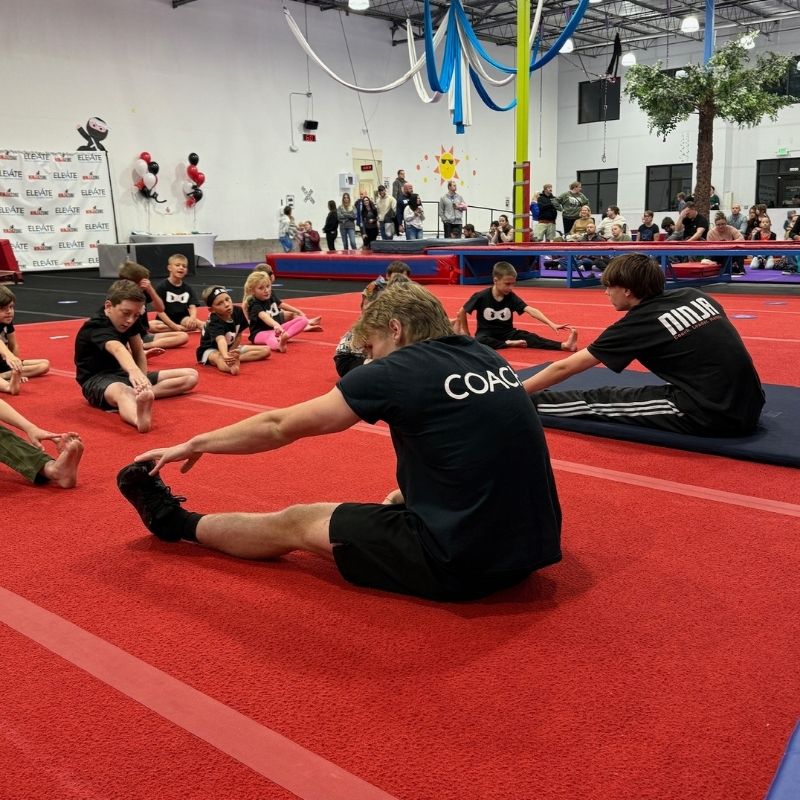
One of the biggest advantages of active classes is that they provide structure while still allowing kids to interact naturally.
Classes are guided by coaches who set clear expectations and boundaries. This helps children understand what is appropriate and how to behave in a group.
At the same time, kids are surrounded by peers they see consistently each week, which builds familiarity and comfort.
There is also a balance between independence and teamwork. Kids work on their own skills, but they do it alongside others, learning how to share space, take turns, and respect the flow of the group.
The most important part is that these lessons do not feel forced. Kids are not sitting down and being told how to develop social skills. Instead, they are learning through participation, repetition, and experience.
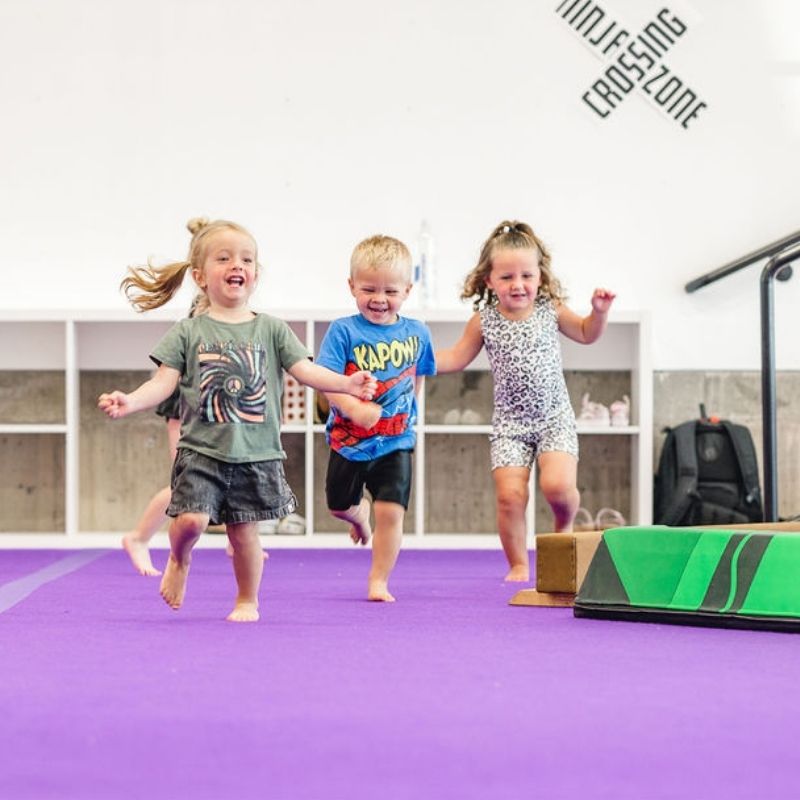
For younger children, social development starts with the basics.
In preschool gymnastics, kids begin learning how to function in a group setting. They practice taking turns at stations, sitting and listening when a coach is speaking, and following simple directions alongside other kids.
They also learn about personal space and how to be aware of others around them. These may seem like small skills, but they are the foundation for future social interaction.
Through these experiences, preschoolers build patience, listening skills, and early awareness of others. These are the same skills they will use during circle time, group activities, and transitions in school.
At this stage, the focus is not on forming friendships yet. It is about helping kids feel comfortable being around others and participating in a shared environment.
As kids get older, social development becomes more about learning how to function within a group.
In recreational gymnastics, students rotate through stations together, wait for their turn, and observe others performing skills. They often encourage their peers, celebrate small wins, and learn by watching others try.
This type of environment teaches respect and awareness. Kids learn that they are part of a group and that their actions affect the flow of the class.
Unlike direct teamwork, this is more about parallel interaction. Kids are working on their own skills, but they are doing it in a shared space where cooperation and awareness matter.
These experiences carry over into school. Kids become more comfortable working in groups, staying engaged while others participate, and contributing positively in a classroom setting.
NinjaZone introduces a more interactive and high-energy social environment.
In these classes, kids often take part in partner challenges, group obstacle courses, and fast-paced rotations. They may cheer each other on, work together to complete tasks, and share in the excitement of the activity.
This builds a different set of social skills. Kids learn teamwork, communication, and how to interact while managing high energy levels. They also have opportunities to step into leadership roles, whether that means encouraging a teammate or demonstrating a skill.
For children who are naturally energetic, this type of environment is especially helpful. It teaches them how to channel their energy in a positive way while still listening and following directions.
In school, this translates to better participation in group games, improved behavior during active lessons, and the ability to stay engaged without becoming overwhelmed.
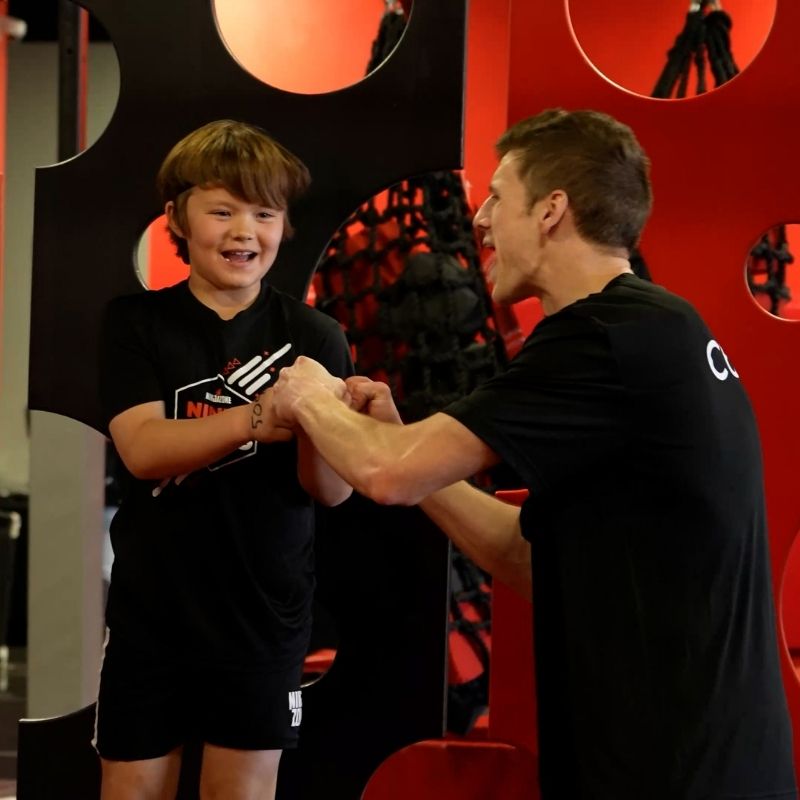
Aerial silks offers a quieter, more focused social experience.
Students work individually on skills, but they share equipment and space with others. This requires patience and respect. Kids must wait their turn, watch others, and stay attentive during demonstrations.
There is also an element of trust. Students rely on coaches for guidance and support, and they learn to ask for help when needed.
These classes build calm social awareness. Kids learn how to be present in a group without needing constant interaction. They become more comfortable focusing while others are around them.
This is especially valuable in school settings where independent work and quiet focus are required. Kids develop the ability to stay engaged, follow detailed instructions, and communicate when they need assistance
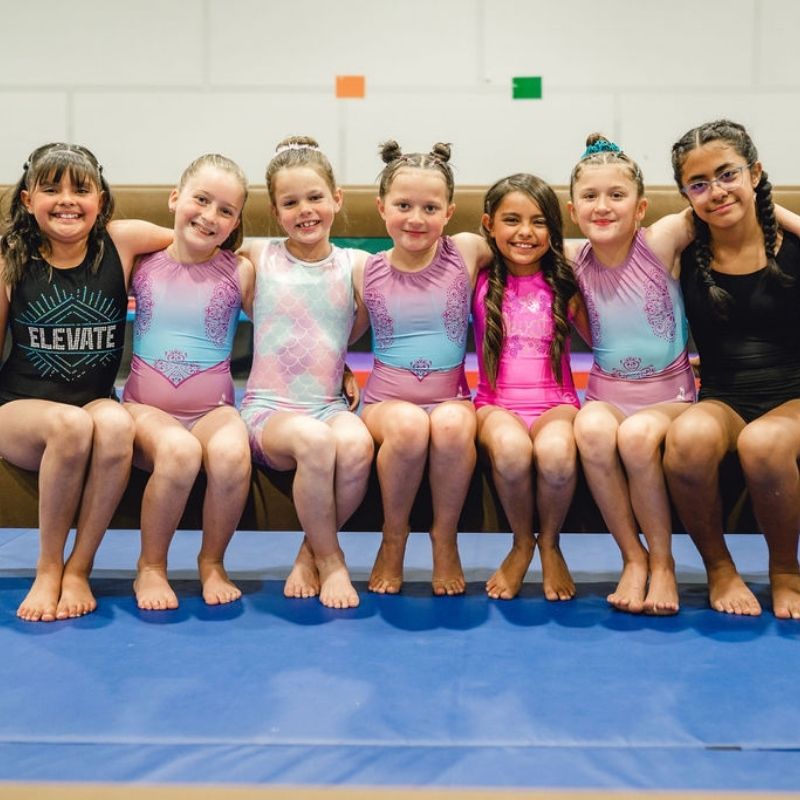
One of the most rewarding parts of these programs is how naturally friendships begin to form.
Kids see the same peers each week, which builds familiarity. They share experiences, work through challenges, and celebrate progress together.
Encouragement from peers often happens without prompting. A simple “you did it” or a smile can go a long way in building connection.
Friendships are not forced or structured. They develop over time as kids become more comfortable in the environment and with each other.
Not every child will jump into social situations right away, and that is completely normal.
Some kids need time to observe before they participate. Others may take longer to feel comfortable speaking or interacting with peers.
The key is consistency. When kids return to the same environment each week, they slowly build familiarity and confidence.
Over time, even the most hesitant children often begin to open up. They start to participate more, interact with others, and feel more at ease in group settings.
Progress may be gradual, but it is meaningful.
Active classes are not just about physical development. They are powerful environments for social growth.
Every child is different, and social growth happens at different speeds. These classes are not a guarantee, but they provide a strong and supportive foundation for building social skills over time.
If you are looking for an activity that helps your child grow both physically and socially, we invite you to explore our programs at Elevate Sports Center.
Try a class and see which environment your child connects with most. Sometimes the best way to build confidence and friendships is simply to get started.
We offer one free trial class to all students who are interested in our programs. From NinjaZone to Tumbling, give one of our classes are shot. After all…. it’s FREE!