
Has your child ever seemed perfectly comfortable with a skill, only to suddenly look a little awkward doing it a few weeks later?
Maybe their balance seems different. Their jumps do not feel quite as controlled. A skill they were performing consistently suddenly takes more effort. For parents, it can sometimes look like a child is moving backward.
But there may be a much simpler explanation: they grew.
Growth spurts can temporarily change the way children move, balance, and coordinate their bodies. When arms and legs become longer, proportions change, and a child’s body can feel different almost overnight. Their brain and muscles then have to adjust to that new body.
For kids participating in gymnastics, tumbling, NinjaZone, aerial silks, or other movement-based activities, those changes can become especially noticeable.
When we think about a growth spurt, we usually picture a child becoming taller. But growing affects much more than how high they can reach.
Their legs may become longer. Their arms may suddenly have a greater reach. Their feet can grow. Their center of balance can shift, and movements that used to feel familiar may begin to feel slightly different.
Imagine practicing a movement hundreds of times and then suddenly performing it with slightly longer arms and legs. The basic skill has not changed, but the body performing it has.
Children need time to recalibrate.
That adjustment can temporarily affect coordination, balance, timing, strength, and body awareness.
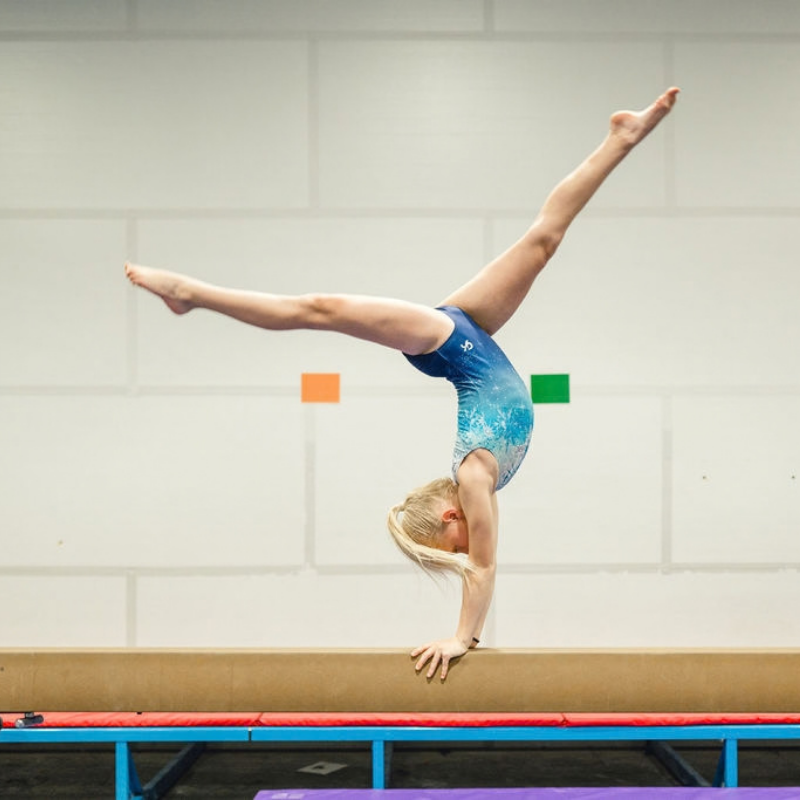
Balance depends partly on understanding where your body is in space.
As children practice movement, they gradually learn how much they need to lean, push, turn, or shift their weight to stay controlled. Much of this eventually becomes automatic.
During a growth spurt, however, their proportions may change faster than their movement patterns do.
A child who previously knew exactly where their body needed to be on a balance beam may suddenly feel slightly less steady. Their center of mass may have changed, their legs may be longer, or their feet may contact the surface differently.
It does not necessarily mean they have lost their balance skills. Their body may simply be learning how to use its new proportions.
Many gymnastics and tumbling skills depend heavily on timing.
A jump, cartwheel, handstand, roll, or tumbling pass involves several movements happening in the right sequence. Even small differences in body position can affect when a gymnast needs to push, rotate, reach, or land.
Longer limbs can change those mechanics.
A child may suddenly need slightly different timing to complete a movement that once felt automatic. The adjustment may be so small that the child cannot explain what feels different. They simply know that the movement does not feel quite the same.
This is one reason repetition remains so important as kids grow. Practice gives the brain and body time to update those familiar movement patterns.
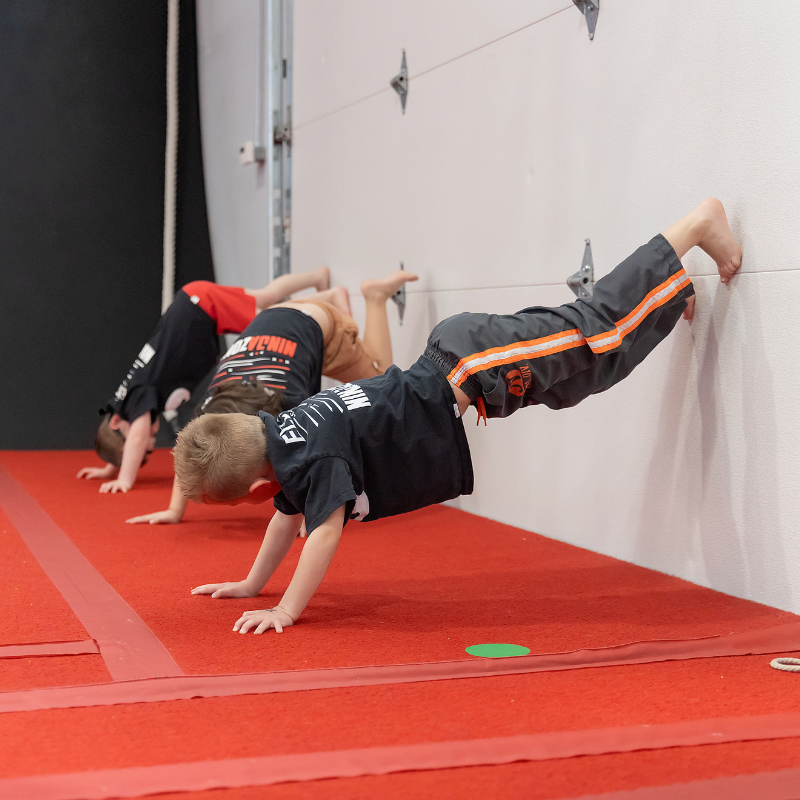
One of the most noticeable effects of rapid growth can be temporary awkwardness.
A child might bump into things more often, mistime a landing, or appear less controlled than they did previously. Parents can sometimes worry that their child is losing progress.
In many cases, the child is actually adapting.
Movement relies on body awareness, sometimes called proprioception. This is the body’s ability to sense where different parts of the body are without needing to look at them.
For example, a gymnast performing a cartwheel does not need to stare at each hand and foot to know where they are. With practice, the body learns those positions.
When the body changes, that internal map may need some updating.
Growth can also change how strength is expressed.
A longer arm or leg creates different leverage than a shorter one. That means certain positions may suddenly require slightly different amounts of strength or control.
A child might find that holding a position feels more difficult even though they have not become weaker.
This is especially noticeable in activities that involve supporting body weight, controlling straight-body positions, hanging, climbing, balancing, or rotating through the air.
Continued practice helps children develop the strength and control needed for their changing bodies.
Parents may occasionally wonder why a coach has a child practicing basic drills when they have already learned more advanced skills.
Growth is one reason fundamentals remain valuable.
Basic shapes, landings, balance exercises, jumps, strength work, and body-position drills allow athletes to reinforce good movement patterns as their bodies change.
A drill that seemed easy six months ago may feel different after several inches of growth.
Returning to fundamentals does not mean a child is moving backward. Sometimes it is exactly what allows them to keep moving forward safely and confidently.
Children often think progress should look like this:
Learn a skill. Master it. Move to the next one.
Real development is much less predictable.
Kids may improve rapidly for several weeks and then seem to plateau. A skill may become consistent and then temporarily become inconsistent again. They may suddenly make a breakthrough after struggling with something for months.
Growth is only one of many reasons this can happen, but it is an important one.
Learning movement is a constantly changing process because children themselves are constantly changing.
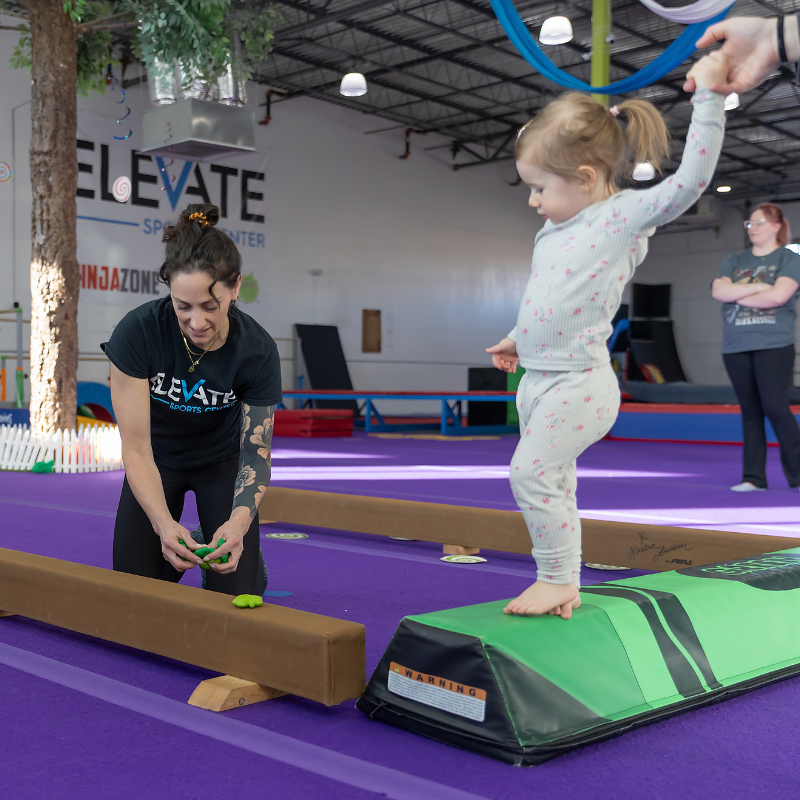
One of the most helpful things parents can do is avoid treating temporary awkwardness as failure.
Instead of focusing only on whether a particular skill looks perfect, recognize the effort involved in adapting to a changing body.
Children may benefit from encouragement such as:
It can also help to avoid comparing a child’s progress with classmates. Two children of the same age may grow at completely different rates and experience physical changes at different times.
Their learning timelines will not always look the same.
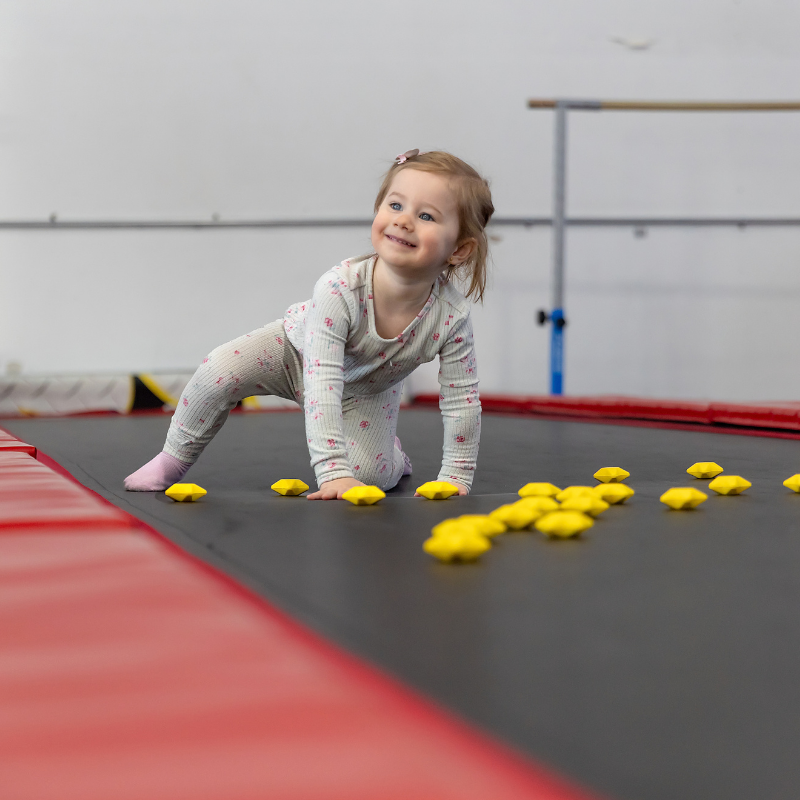
Activities such as gymnastics, tumbling, NinjaZone, and aerial silks give children frequent opportunities to practice balance, coordination, strength, timing, and body awareness.
Those skills are useful not only when children are learning a particular trick or movement, but also as their bodies continue to develop.
Growth spurts can make movement feel temporarily unfamiliar, but they are also a normal part of childhood.
If your child suddenly seems a little less coordinated or struggles with something that used to feel easy, it does not necessarily mean they are losing progress.
Sometimes they are simply learning how to move in a body that is a little taller than it was yesterday.
We offer one free trial class to all students who are interested in our programs. From NinjaZone to Tumbling, give one of our classes are shot. After all…. it’s FREE!